
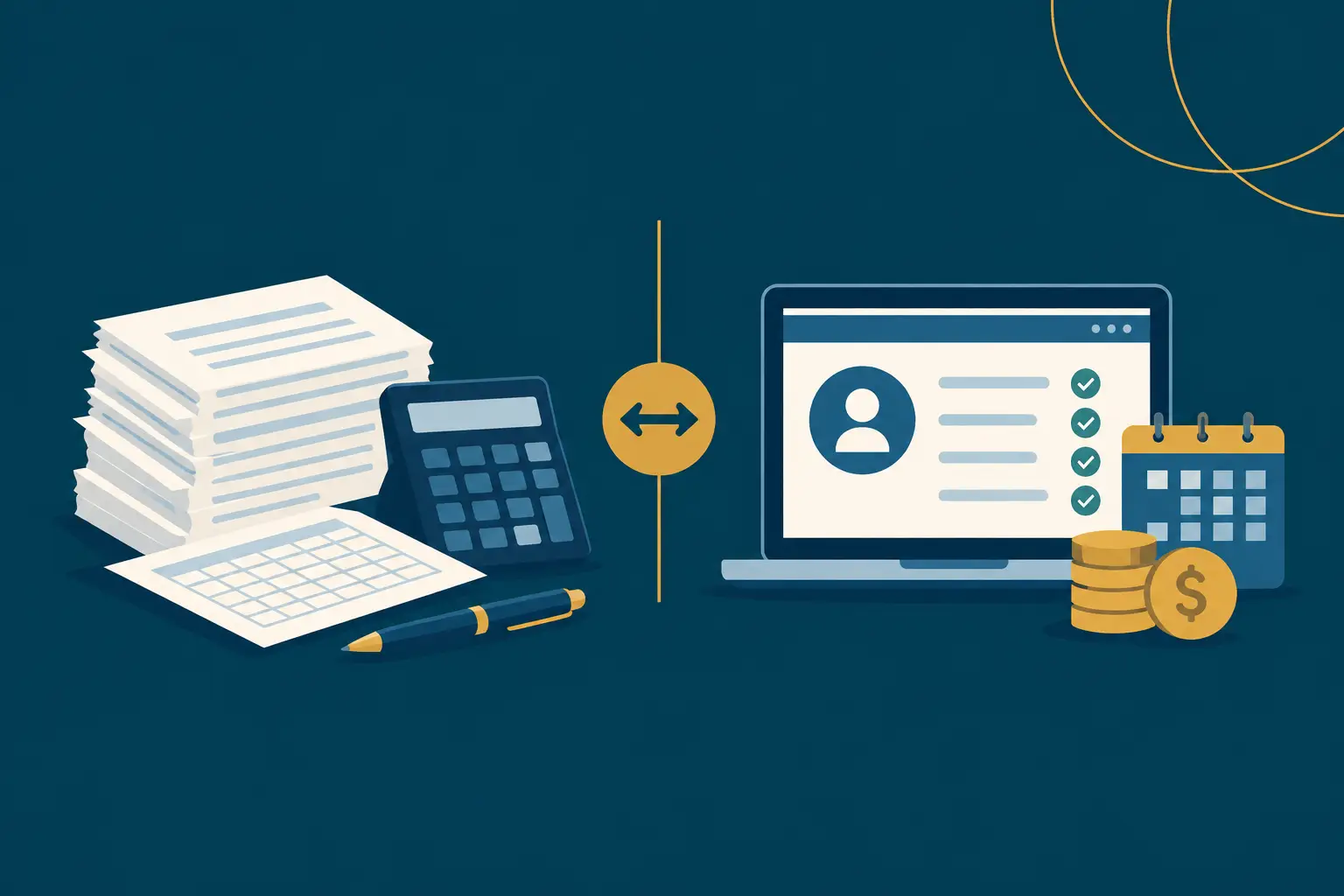
A payroll error rarely stays contained. A missed withholding, an incorrect overtime calculation or a late tax deposit can affect employee trust, disrupt cash flow and create a time-consuming correction process. For business owners comparing manual versus automated payroll, the real question is not simply which method costs less. It is which process gives the business reliable records, appropriate controls and enough visibility to manage payroll responsibly.
Payroll is both a people process and a compliance process. The right approach depends on the number of employees, pay frequency, state registrations, benefit deductions, timekeeping complexity and the capability of the person responsible for the work. A method that feels manageable for a two-person business may become risky as staffing, locations or reporting needs expand.
What Manual Payroll Actually Involves
Manual payroll generally means an owner, bookkeeper or internal staff member calculates gross pay, payroll taxes, deductions and net pay without relying on a full-service automated payroll platform. The work may be performed with spreadsheets, paper timecards, accounting software or a basic check-writing process.
This approach can give a small business a close view of every payroll input. The person processing payroll can see hours worked, commission calculations, sick time and deductions before any payment is issued. For a very small operation with consistent wages and limited payroll activity, that hands-on review may seem practical.
However, manual processing requires more than calculating a paycheck. The responsible person must maintain current employee withholding information, calculate federal and applicable state and local taxes, make required deposits, prepare payroll tax returns and reconcile payroll activity to the books. Year-end reporting, including Forms W-2 and Form 1099 when applicable, also requires complete and accurate records.
A spreadsheet can calculate numbers, but it does not independently confirm that a tax rate, wage base or filing schedule has been applied correctly. It also does not create an audit trail unless the business establishes one. When the same individual can change employee pay data, issue payments and reconcile the bank account without review, the risk of error or misuse increases.
Where Manual Payroll Can Still Make Sense
Manual payroll is not automatically inappropriate. It may be workable when a business has very few employees, straightforward pay arrangements and a knowledgeable person who has time to complete every required task and review it carefully. Some owners also prefer manual review when they are rebuilding accounting records or addressing inconsistent timekeeping procedures.
The key is to distinguish between direct control and administrative burden. Control comes from documented procedures, timely reconciliations and review by someone with appropriate accounting knowledge. It does not come merely from entering every calculation by hand.
A manual process also becomes less practical when payroll changes frequently. Variable hours, bonuses, reimbursements, garnishments, multiple pay rates and benefit deductions all increase the number of calculations that must be checked. Operating in more than one state can add further registration, withholding and unemployment tax considerations.
How Automated Payroll Changes the Process
Automated payroll uses payroll software or a payroll service to calculate pay, process direct deposits or checks, track payroll liabilities and produce payroll reports. Depending on the provider and service level, the system may also prepare or file designated tax forms and schedule tax payments.
Automation reduces repetitive data entry and can apply payroll rules consistently once the system is configured correctly. It can also provide employees with digital pay stubs and self-service access to selected documents. For business owners, payroll reports can be available quickly for bookkeeping, job costing, cash planning and financial statement preparation.
That said, automated does not mean unattended. The business still needs to approve hours, review payroll registers, verify employee setup and monitor funding requirements. A platform can process an incorrect wage rate efficiently if the wrong rate was entered. It can also create reporting problems if payroll accounts are not mapped correctly to the accounting system.
The value of automation is strongest when it supports a disciplined process. Before payroll is submitted, an authorized reviewer should confirm employee hours, pay changes, bonuses, deductions and unusual items. After payroll is processed, the payroll register and tax liability reports should be reconciled to the general ledger and bank activity.
Manual Versus Automated Payroll: Key Trade-Offs
The most useful comparison is not manual versus automated payroll in isolation. It is the overall cost of administration, error correction and lost management time compared with the level of support the business receives.
Manual payroll may appear less expensive because there is no recurring software or service charge. But the internal cost includes the hours required to calculate payroll, make deposits, prepare filings, correct errors and answer employee questions. If an owner handles these tasks late at night or between customer demands, the process may be less reliable than it appears on paper.
Automated payroll adds a recurring operating expense, but it may reduce administrative time and improve the consistency of records. It can be particularly useful for businesses with recurring payroll, direct deposit needs or multiple deductions. The trade-off is that implementation requires careful setup, and the business may still need accounting support to reconcile payroll and interpret the reports.
Compliance responsibility is another important distinction. Some payroll providers offer tax filing and payment services, while others provide calculations and reports that the employer must act upon. Owners should understand exactly which tasks are included, which deadlines remain their responsibility and how corrections are handled. The employer remains responsible for ensuring that payroll information is accurate and that obligations are met.
Match the Process to Your Business Operations
A decision about payroll should begin with an honest review of current operations. Consider whether employee time is collected consistently, whether pay changes are documented, whether payroll taxes are reconciled and whether financial reports reflect payroll costs accurately. These questions often reveal that the problem is not the payroll tool alone. It may be an unclear process around it.
Businesses with salaried employees, stable schedules and simple deductions may need a different level of support than businesses with hourly teams, changing shifts, commissions or employees across several states. Growth also matters. A system that handles current payroll adequately may not provide the reporting, approvals or integrations needed when the business adds managers and departments.
It is helpful to establish clear ownership before selecting or changing a payroll method. One person may collect and approve time, another may submit payroll and an owner or manager may review the final register. Separating these responsibilities where practical creates a meaningful check on payroll activity.
Keep Payroll Connected to the Books
Payroll should not be treated as a separate administrative task that ends once employees are paid. Wages, employer payroll taxes, benefits, reimbursements and related liabilities must be recorded correctly in the accounting system. If they are not, financial statements can understate expenses, misstate liabilities and give owners an inaccurate picture of available cash.
A monthly payroll reconciliation compares payroll reports with bank transactions and general ledger accounts. It also confirms that tax liabilities are cleared when payments are made. This work helps identify duplicate entries, missing expense postings and liabilities that have remained on the books after payment.
Accurate payroll data also improves business planning. Owners can see labor costs by period, evaluate staffing decisions and better anticipate the cash required for upcoming paydays and tax obligations. That visibility is often more valuable than choosing the least expensive processing method.
Recognize When Outside Support Is Appropriate
Outside payroll and accounting support can be useful when payroll filings are behind, records do not reconcile or internal staff have not been trained on the current system. It can also help when a business is hiring its first employees, expanding into a new state or moving from an informal process to documented financial operations.
Sterling Tax & Accounting, Inc. can help businesses evaluate payroll records alongside bookkeeping and financial reporting so that payroll is not managed in a vacuum. The goal is a process that supports accurate pay, clear records and informed decisions without placing unnecessary administrative pressure on the owner.
The best payroll method is the one your business can operate consistently, review confidently and connect to accurate financial records. Start with the process you have, identify where errors or delays are most likely and build the level of automation and oversight that fits the way your business actually works.